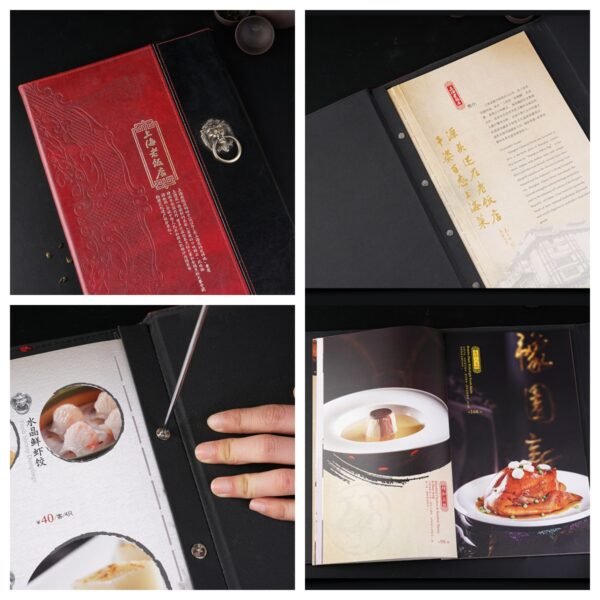
A Chinese menu holder is more than a container for menus — it is the first calling card a restaurant hands to its guests, an extension of the space’s identity, and a silent act of hospitality.
ONE
The Weight of First Impression
The moment the waiter sets the menu holder on the table, the handfeel speaks before a single word is said.
A flimsy holder says convenience. A well-weighted Chinese menu holder says intention. The warmth of leather, the shimmer of gold foil, the embossed cloud or fretwork pattern on the cover — these details add up, and together they tell your guests one thing: this restaurant means it.
Chinese banquet halls, tea houses, hot pot restaurants, upscale private dining — these venues place an inherently high bar on their menu holders. They must be durable, handled dozens of times a day. They must be beautiful, sitting on the table throughout the meal. And they must be memorable, because a great menu holder is something guests remember long after they leave.
Banquet Halls
Fine Dining
Tea Houses
Hot Pot
Private Kitchens
Wedding Venues
Business Dining
TWO
Material Speaks Louder Than Words
Chinese menu holders come in several distinct material routes. The choice reflects the character your restaurant wants to project.
- PU LeatherThe smartest value choice. Rich surface textures — pebbled, matte, croc-embossed. Scuff-resistant and easy to clean, ideal for high-turnover daily dining. Endless color possibilities.
- Genuine LeatherFull-grain cowhide or vegetable-tanned leather that develops a natural patina with age. The feel is irreplaceable. Best for private kitchens and business dining where every touchpoint matters — a genuine heirloom piece.
- Fabric / TextileBrocade, velvet, linen — Chinese textiles carry their own cultural DNA. Brocade’s sheen suits banquet halls; linen’s earthiness belongs in tea houses; velvet’s depth elevates wedding receptions.
- Wood / BambooSolid wood or bamboo composite covers, each grain uniquely its own. Blends seamlessly into tea houses and nature-themed Chinese restaurants. Laser engraving and hand-carving shine on this surface.
- Lacquer BoardA lacquer-inspired finish, typically in black or vermillion. Classic Chinese character, bold and unmistakable. Paired with gold foil stamping, the visual impact is striking — made for restaurants rooted in heritage aesthetics.
THREE
Artistry Hidden in Every Detail
Material sets the tone — craft makes it sing. Here are the signature finishing techniques for Chinese menu holders, each with its own visual language.
Gold & Silver Foil Stamping
Metallic foil heat-pressed onto the cover delivers crisp lines and lasting brilliance. Gold leans warm, commanding, ceremonial. Silver runs cooler and quieter — ideal for modern Chinese aesthetics.
Blind Emboss / Deboss
No ink, no foil — pure pressure from a precision die that leaves dimensional patterns in relief. The real value is tactile: run your fingers across the cover and feel the design rise and fall. Quiet craftsmanship, unmistakable.
Screen Printing
Strong color reproduction that faithfully matches brand palettes. A go-to for restaurant chains that need precise CMYK consistency on logo work. Multi-color runs remain cost-effective at scale.
Spot UV
Selective gloss or matte coating on designated areas creates contrast against the base surface. Often layered with foil stamping or embossing for richer dimension — a favorite for weddings and private clubs.
Laser Engraving
The preferred technique for wood and bamboo covers. Fine-detail precision that renders landscapes, flora, calligraphy — anything that belongs on a canvas. Each engraving varies subtly, giving every piece a touch of individuality.
Hand Stitching
Saddle-stitched or machine-edged on leather holders. More than structural — it signals the maker’s hand. Contrast-color stitching can double as a deliberate design element.
Foil stamping and embossing are never meant to be layered casually. The best combinations let each technique speak in its own place — rather than shouting over one another.
— On the logic of Chinese menu holder craftsmanship
FOUR
Matching Craft to Scene
No single menu holder fits every venue. But every venue has a combination that feels exactly right.
Banquet halls, wedding venues: Lacquer board + gold foil stamping. Black or vermillion base, brand or event name embossed on the cover, gold lettering for the focal point. Presence and ceremony, delivered in one piece.
Upscale Chinese restaurants, private rooms: Genuine leather or premium PU + blind emboss + selective gold foil. A restrained cover with refined motifs. What matters here is how it feels in hand — the quiet confidence of a restaurant that doesn’t need to try too hard.
Tea houses, tea lounges: Linen or bamboo covers paired with screen printing or laser engraving. Grounded colors, clean lines. The holder blends into the tea space — never steals the scene, but holds its own with quiet presence.
Chinese-themed restaurant chains: PU leather for cost efficiency at scale; silver foil stamping or screen printing with unified brand identity. Built tough, designed consistent. Bulk production brings a clear unit-price advantage.
The above is a starting point — the right combination always comes back to your restaurant’s unique character and budget. Not sure where to begin? Send us your reference photos and we’ll propose a tailored material-and-craft plan, samples included.