

.header::after {content:"";position:absolute;bottom:0;left:0;right:0;height:3px;background:linear-gradient(90deg, #c8a86e 0%, #e8d5b0 50%, #c8a86e 100%)} .section:nth-child(even) {background:#faf8f4} .section-head::after {content:"";position:absolute;bottom:-2px;left:0;width:48px;height:2px;background:#c8a86e} .material-list li:nth-child(1) {border-left:3px…
A Zinc Alloy Balm Tin: Material, Craft & Everyday Carry
Material · Craft · Scenario
A Zinc Alloy Balm Tin
From metal to scent, rethinking everyday carry
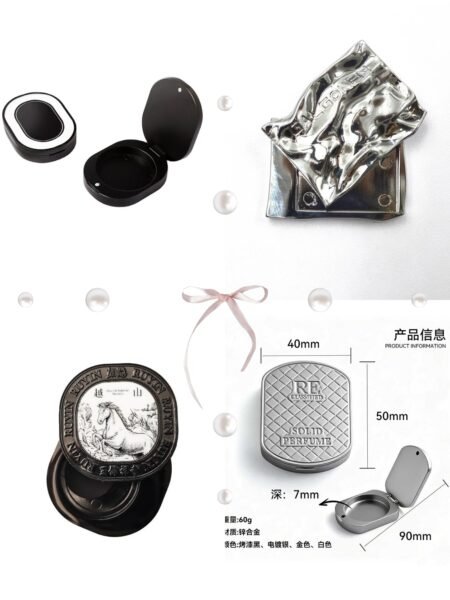
Flip open a zinc alloy tin. Your fingertip meets the cool metal surface, the lid snaps back with a crisp click, and the scent rises.
It feels like a premium accessory experience — yet it costs just over a dollar wholesale.
What matters isn’t the price tag, but the material, craftsmanship, and purpose. Those three dimensions determine how far it can go.
Material
Zinc Alloy: Why It Works
Zinc alloy is a practical choice for small metal goods. It has the right density — substantial in hand without the freight-penalizing weight of stainless steel. Its low melting point enables precision die-casting into intricate curves and shapes. The surface takes electroplating beautifully in gold, silver, gunmetal, rose gold, and more, yielding an even luster and a smooth, refined feel.
Compared to plastic, zinc alloy feels unmistakably premium — the moment someone twists it open, they already expect something worthwhile inside. Compared to copper or stainless steel, zinc alloy balances cost, making a sub-one-dollar wholesale price entirely achievable.
Material is the first impression: a metal tin doesn’t need to justify its worth — it simply is.
Craft
From Mold to Hand: Every Step Counts
A zinc alloy balm tin takes shape through four main stages: die-casting, deburring and polishing, electroplating, and flip-top assembly. Die-casting defines the shape — round, oval, floral, square — the mold sets the outline. Electroplating determines luster and scratch resistance. And the flip-top hinge tension directly governs the open-and-close feel.
Customization is worth highlighting: logos can be laser-engraved or debossed. Colors range from gold, silver, and black to red, green, and pink. The interior is ready to hold balms, salves, or small accessories of your choosing. For corporate procurement or brand customization, this means you define the product from the inside out.
The goal of good craftsmanship: the same satisfying click, every single time.
Scenarios
Four Use Cases, Four Reasons to Buy
On-the-go carry. Solid contents won’t spill; the metal case won’t crack inside a bag. Perfect for travel, commuting, or a quick touch-up on the move. Ideal for airline and hotel amenities, or travel kit accessories.
Gifting. Annual galas, wedding favors, client appreciation — long after the contents are gone, the tin lives on as a jewelry box, pill case, or earbud holder. A small container that never gets thrown away is the longest-lasting brand touchpoint.
Brand merch. A 100-unit MOQ with logo customization makes it ideal for indie brands launching debut kits or subscription box add-ons. Low cost, high perceived quality — so your brand’s first impression lands with quiet confidence.
Retail hero. The distinctive zinc alloy design naturally catches the eye in e-commerce photos. At just over a dollar cost, a retail price of $8–15 delivers healthy margins.
Pick the right scenario, and the product sells itself.
Recommendation
Who Should Buy, and What to Watch For
If you’re a cross-border e-commerce seller, corporate gift buyer, indie fragrance brand founder, or subscription box curator, this zinc alloy balm tin deserves serious consideration. The low 100-unit MOQ lets you test the market with a small batch before scaling up.
Before ordering, do three things: request empty tin samples to check weight, test the flip-top feel, and inspect the plating quality. Be clear that these are empty tins — customers fill them themselves — so evaluate the material and build. And lock in the full picture on delivery timelines and total costs before communication overhead eats your budget.
A good tin — from material to craft to delivery — depends on a reliable supplier. Don’t just compare prices. Look for the partner willing to walk you through the first sample run.
To the right buyer, it’s a perfectly-timed product. To the wrong one, it’s just a piece of metal.
In Summary
Zinc alloy is the skeleton. Electroplating is the skin. Scenario-driven purpose is the soul.
How far a one-dollar tin travels depends not on the material,
but on where it’s placed — in a carry-on, a gift bag, a brand launch kit, or a bestseller list.
Products never exist in isolation. They come alive in context.
