

How to Choose the Right Curtain Fabric Sample Binder — A Practical Guide
===== Header =====
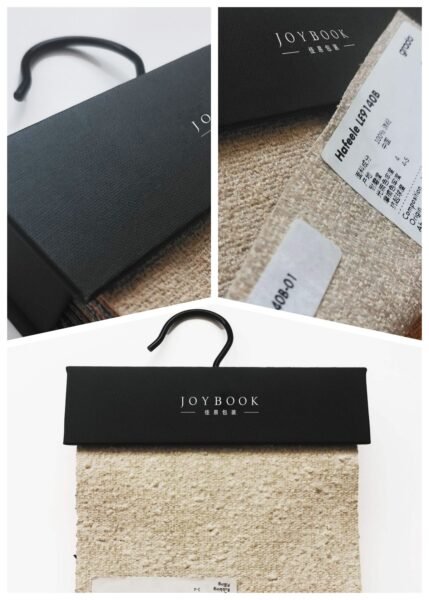
You know you need a fabric sample binder. But which cover material? Which ring mechanism? Do you really need a handle? And how do you make it look premium without overspending? This guide answers exactly those questions — in the order you’d ask them.
QUESTION 01
Which Cover Material Should I Choose?
This is the first decision, and it sets the tone for everything else. The cover is what your client touches, holds, and sees first. Here’s how to think about it — not by material, but by your brand position.
If you’re a volume supplier
Paper / Cardboard
Lightweight, printable in full color, lowest cost per unit. Perfect when you produce hundreds of binders and update them frequently.
If you’re a premium brand
PU Synthetic Leather
Leather-like touch, water-resistant, holds foil stamping beautifully. The best balance of luxury and durability for daily showroom use.
If you’re a designer studio
Binding Cloth / Linen
Natural fabric texture, understated elegance. Pairs perfectly with deboss branding for a quiet, confident look.
If you’re unsure
PU — start here
It’s the most versatile choice. Looks premium, costs reasonably, and works with every printing method. You can’t go wrong.
QUESTION 02
Round, O, or D-Ring — What’s the Real Difference?
Most buyers overthink this. Here’s the honest truth: all three work well. The difference is in how the pages lie when the binder is open, and how many pages you can fit.
QUESTION 03
Do I Really Need a Handle?
Short answer: Yes, if you carry it anywhere.
A built-in handle turns a static binder into a mobile presentation tool. If your team visits clients, attends trade shows, or moves between showrooms — the handle isn’t a luxury, it’s a necessity. Without it, you’ll end up carrying the binder awkwardly under your arm, or buying a separate bag that doesn’t match.
“The right binder doesn’t just hold your fabrics —
it makes the client want to open it.
QUESTION 04
How Do I Make It Look Premium Without Overspending?
This is where most buyers waste money — by adding too many finishing techniques. The secret to a premium look isn’t doing more; it’s doing the right one.
QUESTION 05
What Size and How Many Pages?
Size and page count should match your fabric collection size, not your ambition.
QUESTION 06
What’s the Smartest Combo for My Budget?
Here are three proven configurations at different price points — each one is a smart, complete choice. No upselling, no fluff.
Entry Level
Smart & Clean
Paper cover
Full-color print
Round rings, 25mm
20 pages, no handle
Full-color print
Round rings, 25mm
20 pages, no handle
Best for bulk / high turnover
Mid-Range
Professional
PU cover
Foil + deboss
D-rings, 38mm
40 pages, with handle
Foil + deboss
D-rings, 38mm
40 pages, with handle
Best for daily showroom use
Premium
Designer Grade
Binding cloth
Foil + deboss
D-rings, 50mm
60+ pages, handle + dividers
Foil + deboss
D-rings, 50mm
60+ pages, handle + dividers
Best for luxury brands
Your Decision Checklist
- ✓Cover material — choose by brand position, not by price alone
- ✓Ring type — D-Ring for 30+ pages; round/O for thinner binders
- ✓Handle — include it unless the binder never moves
- ✓Branding — foil stamping + deboss is the golden combo
- ✓Page count — order 20% more than your current collection
- ✓MOQ starts at 50 pieces — ask about tiered pricing for larger orders
